
Question: Wheat or Tare

During his earthly ministry, Jesus often used parables when addressing his audiences. He used parables to illustrate important spiritual principles having to do with the kingdom of God and our relationships with God and with one another. He did not often explain the full meaning of the parables to his audiences, but it wasn’t because he wanted to “hide the meaning,” nor because he was “lying,” as some have imagined. It was because of their hardness of heart. But he did explain the meanings to his closest disciples, whom he told to explain it to others (Matthew 10:27). This is explained in more detail in our article “Does God Lie?

One of the parables of Jesus is the one featuring seeds sown of wheat and tares, lessons from which are explored in this message.

“Question: Wheat or Tare” a message by Rod Reynolds, is licensed under a Creative Commons Attribution-NonCommercial-NoDerivatives 4.0 International License.

cogmessenger.org

Messenger Church of God
PO Box 619
Wentzville, MO 63385
USA

Do As You Know

There are certain fundamental things that most anyone who is familiar with the Bible, and especially anyone familiar with the teachings of God’s Church, knows — or should know. All of us know, or should know, the great commandments: Love the eternal God with all your heart, mind, being. Love your neighbor as yourself. We know the ten commandments which explain how to apply these great principles in practical terms: Worship only the true God, make no idols, don’t use God’s name in vain, keep the Sabbath day, honor your father and mother, don’t murder, commit adultery, steal, lie nor covet your neighbor’s possessions. You know, or should know, how the prophets and apostles, and Jesus Christ himself, further magnified these commandments, emphasizing the weightier matters of the law, judgment, mercy and faith.

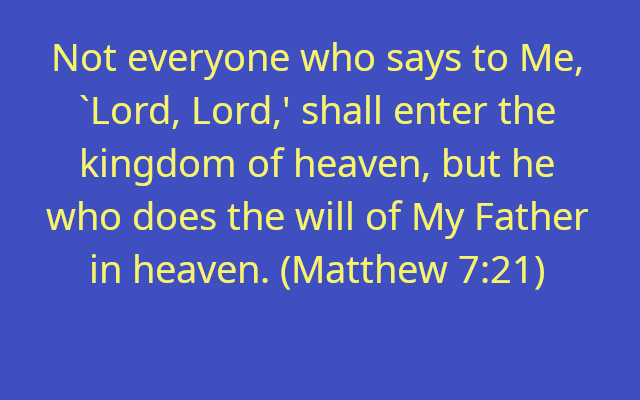
But do we understand fully what God expects of us given the knowledge we have? Do we understand that we are accountable to God based on what we know? This includes every one of us. Parent and child. Baptized or unbaptized.
Continue reading

The Law of Liberty

Is the law revealed in Scripture a curse, bondage, not relevant for a Christian because it’s been replaced by Christ? Are the ten commandments outmoded “Old Testament” law that can be safely ignored, as many believe? The Bible speaks of the commandments as the “law of liberty.” Which is it? The law of liberty, or of slavery?

Continue reading

Unleavened Bread — Flee Sin in Haste

“The next day John saw Jesus coming toward him, and said, ‘Behold! The Lamb of God who takes away the sin of the world!’” John the Baptist identified Jesus Christ as the Lamb of God, who takes away the sins of the world (John 1:29)

Immediately after the Passover comes a festival that depicts the next step in the fulfillment of God’s master plan: the seven days of Unleavened Bread. The Passover pictures Christ’s death to save us from sin and its ravages. Jesus did not sacrifice Himself for us so we will continue to live in sin. Christ’s death reconciles us with God so we can become children in His family. Sin separates us from God. We read in Isaiah: “Behold, the Lord’s hand is not shortened, That it cannot save; Nor His ear heavy, That it cannot hear. But your iniquities have separated you from your God; And your sins have hidden His face from you, So that He will not hear” (Isaiah 59:1-2).

Continue reading

Repentance

Repentance according to Scripture is necessary for salvation. Genuine repentance from a Scriptural standpoint is not just remorse, although it includes that, but a change in the way you think, and behave, and are – to a different way – to become a different person. Repentance from sin is a “change of mind [that] involves both a turning from sin and a turning to God” (Vine’s Expository Dictionary).

Continue reading